Evidence. Engineering. Resilience.
Wildfire,
understood.
Real fires. Traceable sources. Practical engineering.
Explore what the evidence reveals—and plan for smoke, power outages and a more resilient home.
Background: Tecnobosque field-test footage, not a featured incident. Historical archive, not a live emergency map.
The world through its fires
Every fire has a story.
Follow the evidence.
Six starting points across five countries. Explore the record behind the headline.
North America
1397public records · mainland US & CanadaOceania
33public records · Australia & HawaiʻiEurope
21public records · Portugal, Greece & SpainSouth America
2public records · ChileAfrica
1public record · Canary Islands, SpainComplete archive counts by incident location. Hawaiʻi is grouped with Oceania. The featured cases below are a selection.
Black Saturday.
A day, multiple fires, a changing record. Separate the timeline, causes and documented losses.
Trace the Black Saturday record Maui · United States2023Lahaina.
Follow a full pilot record: evidence chronology, reconstruction and the questions that remain.
Open the Wildfire Black Box Alberta · Canada2024Jasper
Building losses, the incident timeline and recovery evidence.
Explore the case Attica · Greece2018Mati
Rapid spread and the problem of time available for evacuation.
Examine the timeline Central Portugal2017Pedrógão Grande
Weather, merging fronts and the limits of reconstruction.
Follow the evidence United States1988Yellowstone
A historic season, policy questions and ecological recovery.
Explore the recordA worked example, a monitoring log and official EPA sources.
Free engineering tools
Turn the question
into a number.
Use transparent calculators for cleaner indoor air, backup power, home protection and fire behaviour. Inputs, units and assumptions stay visible.
Evidence, not just headlines
What happened.
What the record supports.
Trace incidents through dated sources, changing maps, operational updates and clearly separated interpretation.
Current & recent fires
Browse incident information and dated updates. Check each source and review time.
Explore recent fires → UNDERSTANDWildfire Black Box
Examine past incidents, how the evidence developed and what remains uncertain.
Explore incident records → COMPARELook across incidents
Compare the documented evidence behind the pilot records using the evidence matrix.
Open the comparison →Follow a question
From one fire to a deeper understanding.
Explore what research can establish about evacuation, home survival and recovery—and where the evidence stops.
When does the evacuation clock start?
Mati and Gatlinburg reveal the difference between time available, receiving a warning and beginning to move.
Read the cross-incident analysis → 02 · HOME SURVIVALProtection under what exposure?
NIST’s Witch–Guejito research examines why building features, fire exposure and defensive actions must be considered together.
Explore the evidence → 03 · AFTER THE FIREWhat changes when the rain arrives?
Las Conchas connects debris-flow estimates with later observations of sediment moving through a river system.
Follow the watershed record →Research summaries and Tecnobosque interpretation, linked to primary sources. Browse all nine reading paths.
How we read the record
The source matters. So does what it cannot tell us.
Five full pilot records include detailed evidence registers. Additional case studies focus on specific findings and their limits. Our methodology keeps documented facts, Tecnobosque interpretation and unresolved questions distinct.
Tecnobosque Wildfire Knowledge Graph
The fire has a language.
Now it has a map.
Move from terminology to engineering, evidence and real incidents. 328 connected concepts explain not only what a term means, but what it changes.
Explore the complete glossary ↗Fireline Intensity
Enter domain → 02 · 34 concepts OperationsWildfire Containment
Enter domain → 03 · 37 concepts Fuels & WeatherFire Weather
Enter domain → 04 · 37 concepts Built EnvironmentWildland–Urban Interface (WUI)
Enter domain → 05 · 14 concepts Heat TransferRadiant Heat Flux
Enter domain → 06 · 20 concepts Smoke & Indoor AirPM2.5
Enter domain → 07 · 19 concepts Water SystemsTotal Dynamic Head (TDH)
Enter domain → 08 · 21 concepts Emergency PowerBattery Capacity
Enter domain → 09 · 22 concepts Public InformationEvacuation Order
Enter domain → 10 · 14 concepts Fire InvestigationFire Cause
Enter domain → 11 · 22 concepts EvidenceKnown At
Enter domain → 12 · 29 concepts Remote Sensing & MappingFire Radiative Power
Enter domain → 13 · 20 concepts Fire Ecology & RecoveryBurn Severity
Enter domain →Practical resilience
Before the fire.
Beyond the headlines.
Connect the building, the air you breathe and the equipment you depend on. Start with the part that matters to you.

Smoke & indoor air
Plan filtration and size a cleaner-air room before smoke arrives.
Explore clean air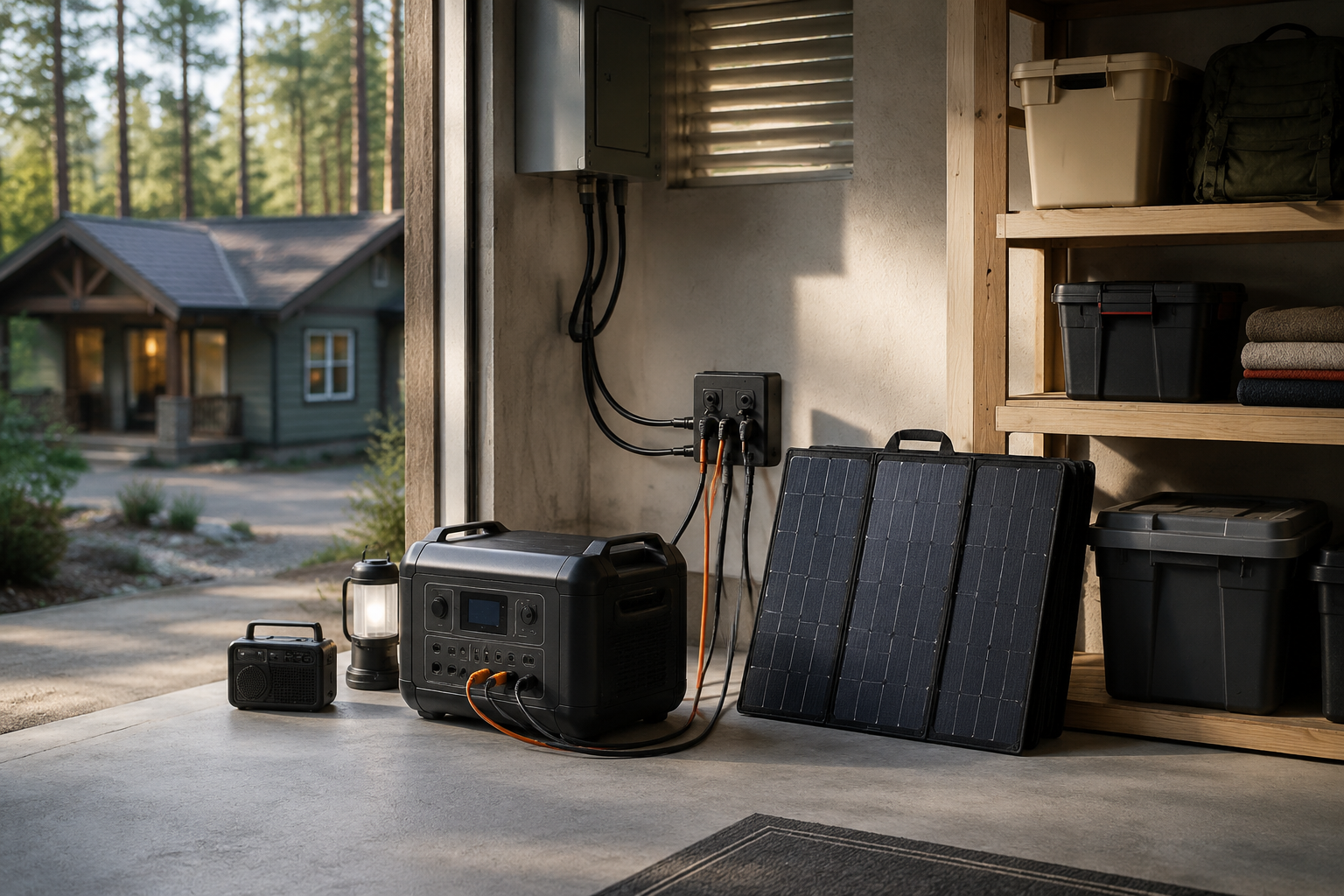
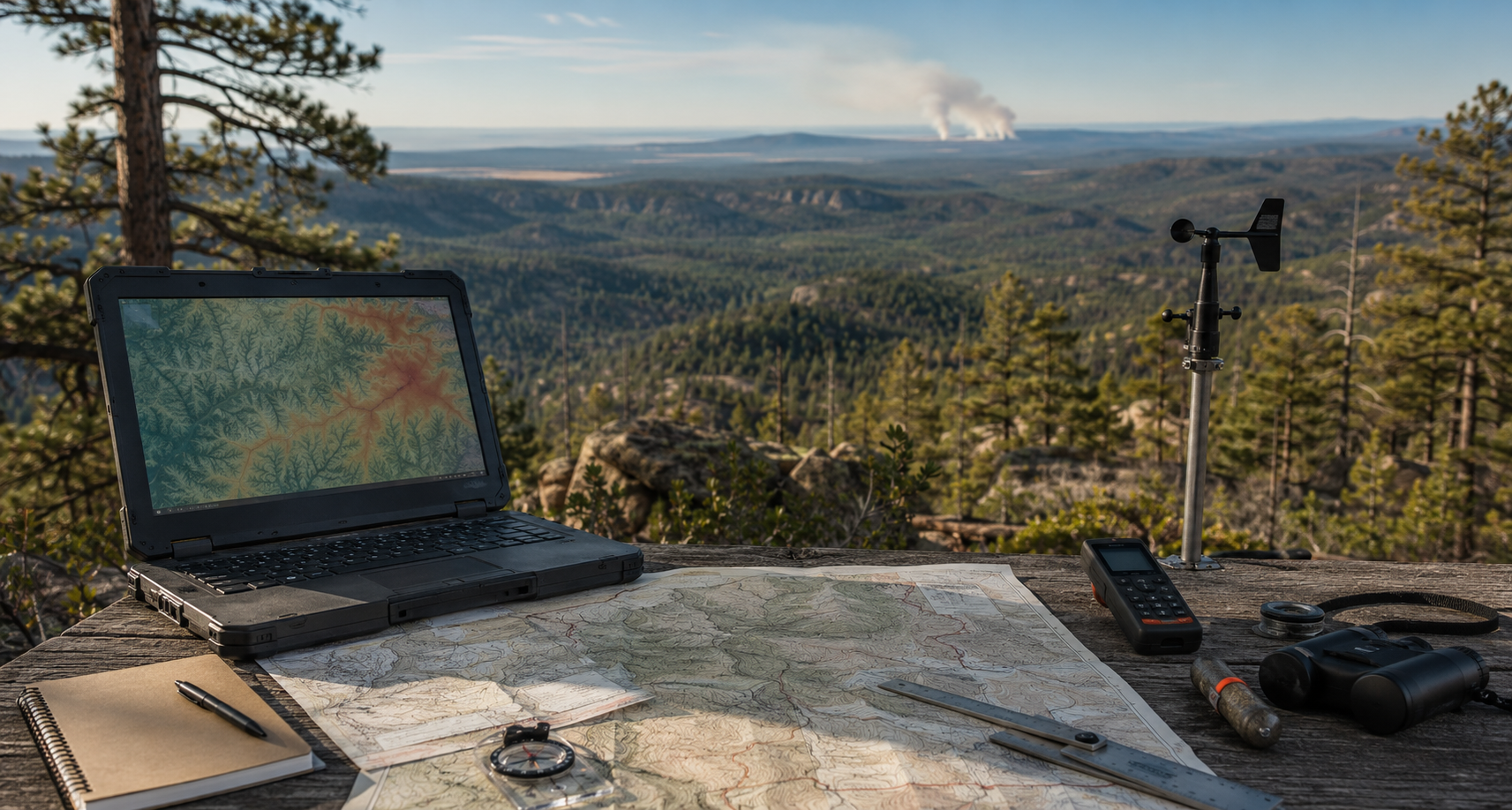
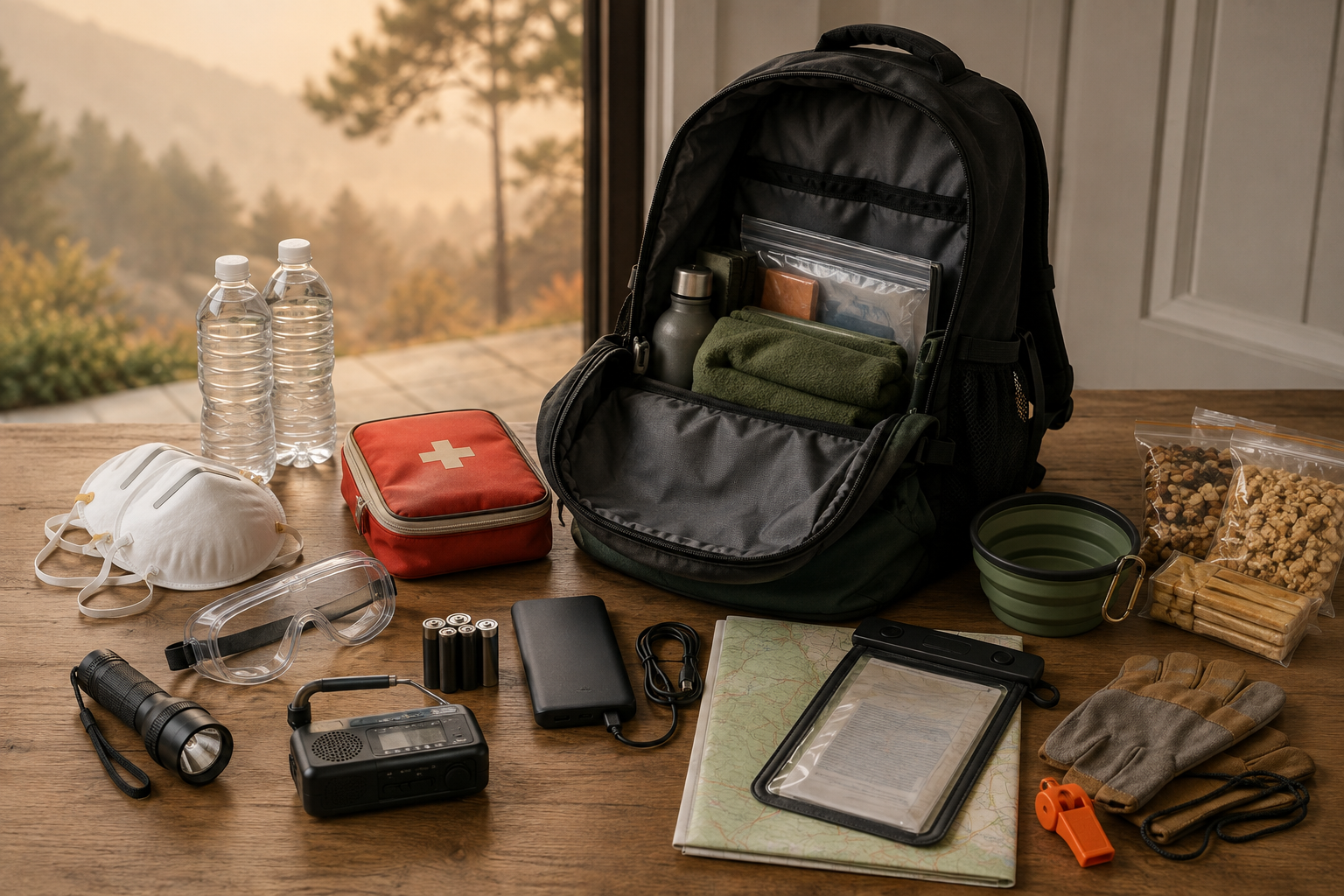
Evacuation readiness
Organise essentials, communications, medication and documents.
Open the checklistBuild resilience
Preparation starts
outside the walls.
Bring home hardening and defensible space together. Examine ember entry, nearby fuels and vulnerable attachments as parts of one system.
Independent technical information. Not an emergency alert service, an official investigation or a substitute for local evacuation instructions.