A wildfire evacuation kit should help you leave early, communicate, protect against smoke exposure and manage the first hours away from home. It should never become a reason to delay evacuation. This practical checklist separates essential items from optional gear and explains what to compare before buying.
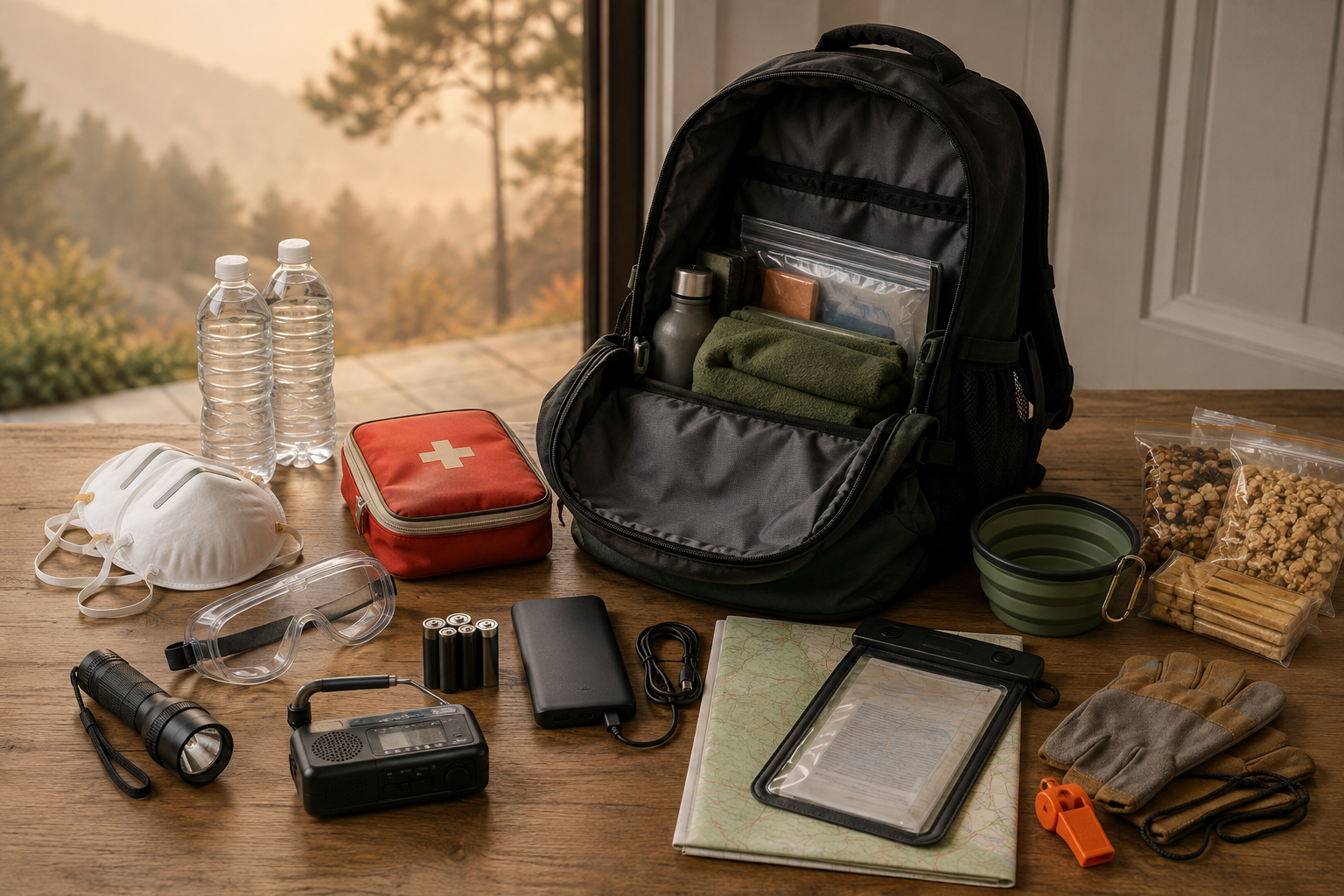
First rule: the kit supports evacuation—it does not replace it
Follow local alerts, evacuation orders and emergency instructions. Leave early when advised and do not return for equipment. Store the kit where it is easy to reach, keep vehicle access clear and make sure every household member knows the departure plan, meeting points and backup routes.
| Priority | Purpose | Examples |
|---|---|---|
| Leave safely | Identity, health, communication and transport | Keys, phone, charger, identification, essential medication, mobility aids and evacuation information |
| Manage smoke and visibility | Reduce particle exposure and remain visible | Appropriate respirators, protective eyewear, flashlight and high-visibility item |
| Cover the first hours | Water, food, warmth and basic hygiene | Water, compact food, clothing layers, sanitation supplies and first aid |
| Prepare for displacement | Documents, contacts, pets and additional power | Document copies, insurance details, pet supplies, radio and power bank |
1. Alerts, routes and communication
- Phone with emergency alerts enabled and offline copies of important numbers.
- Printed local map showing more than one exit route and meeting point.
- Battery or hand-crank radio compatible with the emergency broadcasts used in your region.
- Power bank, short charging cables and vehicle charging adapter.
- Whistle and compact LED flashlight or headlamp.
Do not rely on one network, one route or one person’s phone. Download any local emergency apps and maps before an incident, then keep a printed backup. For larger batteries and extended outages, use the Portable Power Station Buying Guide.
2. Respiratory protection for wildfire smoke
A properly fitting, approved particulate respirator can reduce inhalation of fine particles. In the United States, look for a genuine NIOSH-approved N95 or P100 respirator and verify its approval markings. Equivalent standards apply in other markets.
- Choose the correct size and style for each intended user.
- Facial hair and poor fit can substantially reduce protection.
- Particulate respirators do not protect against carbon monoxide or all gases and vapours.
- They are not designed for travel through flames or oxygen-deficient environments.
- Children and people with medical conditions may need specific professional guidance because standard respirators may not fit or may make breathing harder.
For indoor smoke planning and air-cleaner sizing, use the Smoke & Indoor Air Quality guide.
Respirator buying guide: compare approval, fit, N95 and P100 filtration, reusable options and counterfeit warning signs in the N95 and P100 Respirator Buying Guide.
3. Water and compact food
Follow the amount and duration recommended by local emergency authorities and adapt it to heat, travel time, children, older adults, medical needs and pets. Use durable food-safe containers, rotate stored water and avoid making the bag so heavy that it cannot be carried safely.
- Drinking water plus a small reserve kept in the vehicle when conditions allow.
- Shelf-stable foods requiring no cooking and minimal water.
- Manual can opener if packaged food requires one.
- Basic utensils, waste bags and hygiene supplies.
4. Medication, first aid and health information
- Essential prescription medication and copies of prescriptions where permitted.
- Compact first-aid kit suited to the household’s skills and needs.
- Spare glasses, hearing-aid batteries and required mobility supplies.
- Written allergies, conditions, emergency contacts and clinician details.
- Sun protection, hand hygiene and any required menstrual or continence products.
Review expiry dates and storage-temperature requirements. Do not include unfamiliar medical equipment that household members are not trained to use.
5. Documents and money
Keep paper copies or encrypted offline copies of identification, insurance, property details, prescriptions, emergency contacts and pet records. Use a clearly organised water-resistant pouch. Do not expose full identity or financial data on labels visible from outside the bag.
- Identification and essential legal or medical documents.
- Insurance policy and claims contact information.
- Photos or inventory references useful after an incident.
- Some cash in small denominations where appropriate.
- Spare keys stored securely.
6. Clothing, visibility and practical protection
- Sturdy closed footwear and work gloves.
- Long-sleeved clothing and long trousers made for ordinary evacuation travel.
- Warm or rain layer appropriate to the season.
- High-visibility vest, light or reflective item for low-visibility conditions.
- Clear protective goggles that do not interfere with the respirator fit.
Ordinary evacuation clothing is not structural firefighting equipment. Avoid claims that imply a blanket, mask, suit or bag makes it safe to remain in a fire area.
7. Pets and assistance needs
- Carrier, leash, harness and identification.
- Food, water, bowl, medication and waste supplies.
- Vaccination and veterinary records.
- Recent photo and backup contact who can help.
Plan transport in advance for large animals, multiple pets and household members who need assistance. Identify accessible evacuation destinations before fire weather arrives.
8. Vehicle-ready equipment
Keep the vehicle maintained and avoid allowing fuel or charge to fall too low during high-risk periods. Useful vehicle items can include a paper map, vehicle charger, water, flashlight, visibility vest, basic tool kit and seasonal clothing. Never store damaged batteries, leaking fuels or heat-sensitive items in unsafe conditions.
How to compare evacuation-kit products
| Product | What to verify | Common buying mistake |
|---|---|---|
| Respirator | Recognised approval, authenticity, size, fit and user limitations | Buying a generic “smoke mask” without verifiable certification |
| Power bank | Usable capacity, output ports, cable compatibility and credible safety testing | Comparing only advertised milliamp-hours |
| Radio | Emergency frequencies for your location, battery options and simple controls | Assuming every weather radio works in every country |
| Flashlight or headlamp | Runtime at usable brightness, replaceable or rechargeable cells and weather resistance | Choosing maximum lumens with poor sustained runtime |
| Backpack | Comfort under actual load, strong handles, organisation and visibility | Building a bag too heavy for the intended user |
| Document pouch | Water resistance, organisation and quick access | Treating “fire-resistant” marketing as guaranteed document survival |
| First-aid kit | Relevant contents, clear labelling, expiry dates and user competence | Buying a high item count filled with duplicates or unusable components |
What not to rely on
- Uncertified masks sold only with vague “smoke protection” claims.
- Oversized survival kits that cannot be carried quickly.
- “Fireproof” bags or blankets presented as permission to delay evacuation.
- Cheap battery products with unclear manufacturer, testing or recall support.
- Fuel-burning devices intended for indoor use.
- One route, one communications channel or one evacuation destination.
Printable wildfire evacuation checklist
Departure
☐ Keys and vehicle ready
☐ Phone and emergency alerts
☐ Evacuation routes and meeting point
☐ Essential medication and mobility aids
Communication and power
☐ Power bank and compatible cables
☐ Vehicle charger
☐ Battery or hand-crank radio
☐ Flashlight or headlamp
☐ Printed emergency contacts
Smoke and personal protection
☐ Approved respirators in correct sizes
☐ Clear protective goggles
☐ Work gloves and sturdy footwear
☐ Long clothing and weather layer
☐ High-visibility item
Water, food and health
☐ Water for people and pets
☐ Ready-to-eat food
☐ First-aid kit
☐ Hygiene supplies
☐ Glasses, hearing supplies and health information
Documents and pets
☐ Identification and insurance copies
☐ Cash and spare keys
☐ Pet carriers, leashes and identification
☐ Pet food, medication and records
☐ Secure backup of essential documents
Review schedule
Check the kit before each local fire season and after every use. Replace expired medication, food, water, respirators and batteries; recharge power banks; update routes, contacts, documents and pet information; and test that the final bag can still be carried by its intended user.
Our independent buying standard
Tecnobosque will compare evacuation products using verifiable certification, functional performance, durability, weight, replacement cost, availability and limitations. A product will not rank higher merely because it pays a larger commission. Retail links may be affiliate links; see our Affiliate Disclosure.
Official preparedness references
Local authorities and incident-specific instructions take priority. This guide supports preparedness and product comparison; it does not provide firefighting, medical or evacuation-command advice.